Camera Grid
Put the subject in the dead centre of the frame when the scene is balanced left to right: a doorway, a facade, a bridge seen square on, a face looking straight at the lens, a mountain mirrored in a lake. In those scenes a centred frame feels calm and deliberate, and pushing the subject to a third throws the balance away. The skill is in the details. Stand exactly on the axis, keep verticals upright and horizons level, and check that both sides really match. This guide covers when the middle wins, and how to shoot three kinds of symmetry: a centred subject, a mirrored scene, and a reflection.
When the middle wins
A centred subject makes the two halves of the frame equal. Equal halves feel still and formal. That is a problem for an everyday snapshot, where the stillness reads as a lack of choice. It is exactly right when the scene itself is built around a centre line.
Centre the subject when:
- The scene is symmetrical. Architecture, gates, staircases, rows of columns, a tree-lined avenue.
- The subject is symmetrical and faces you. A face looking into the lens, a vase, a car from the front.
- Lines meet in the middle. A corridor or road with one vanishing point.
- There is a reflection. Still water mirrors the scene above it.
- You want the viewer to confront the subject. Centring removes every other place for the eye to rest.
Keep the subject off centre when one side of the scene is busier than the other, or when the subject is looking or moving to one side.
Dead centre: one subject in the middle
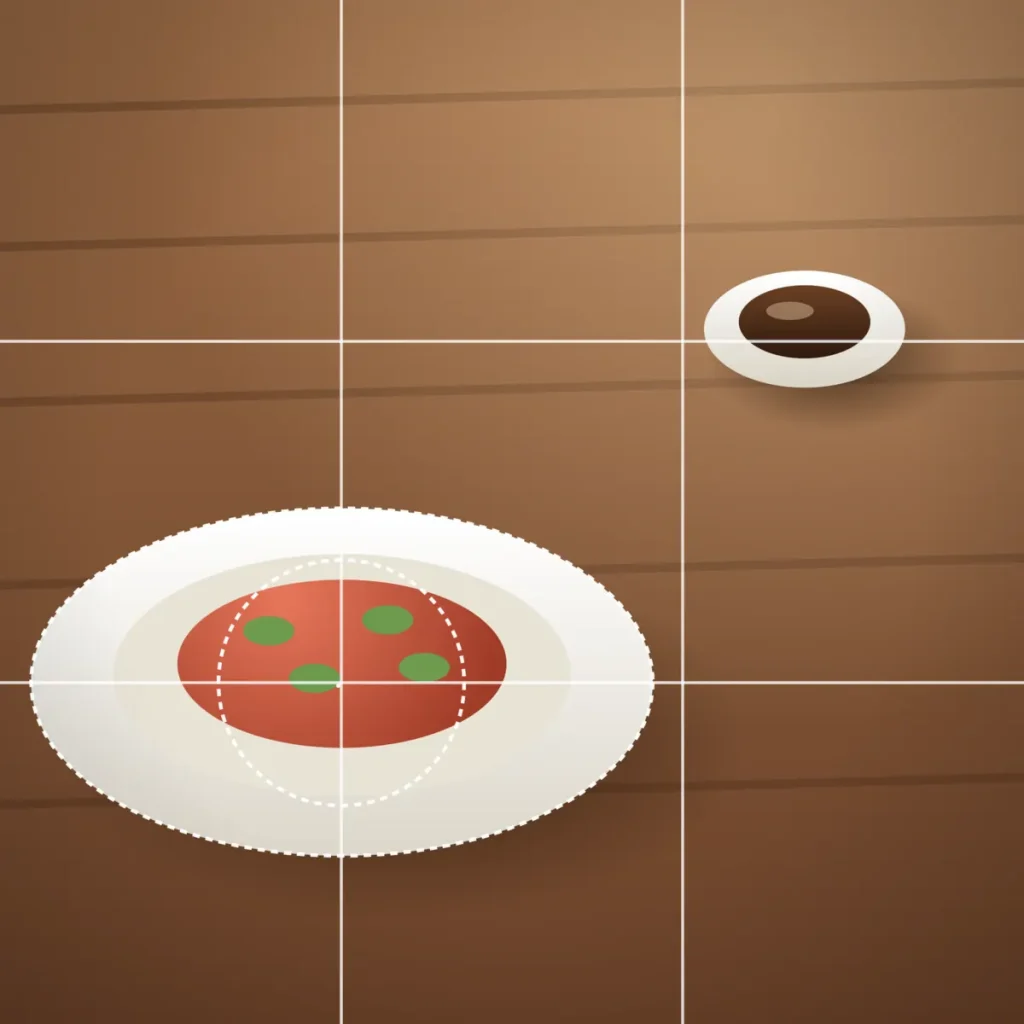
This is the simplest case. One subject, balanced in itself, set in the middle of the frame. A lone door in a wall. A plate on a table from above. A statue in a niche.
- Stand square to the subject. If you are a step to one side, one edge of it will look closer than the other.
- Centre its axis. Find the line that splits it into matching halves and put that on the frame’s centre line.
- Keep the edges even. Check the space on the left against the space on the right. Unequal margins are the first thing a viewer notices.
- Leave some room. A centred subject with space around it feels composed. Cropped tight, it becomes a Fill the Frame shot.
The Dead Centre guide is built for this: formal and still, for scenes already balanced left to right.
Vertical symmetry: a mirrored scene
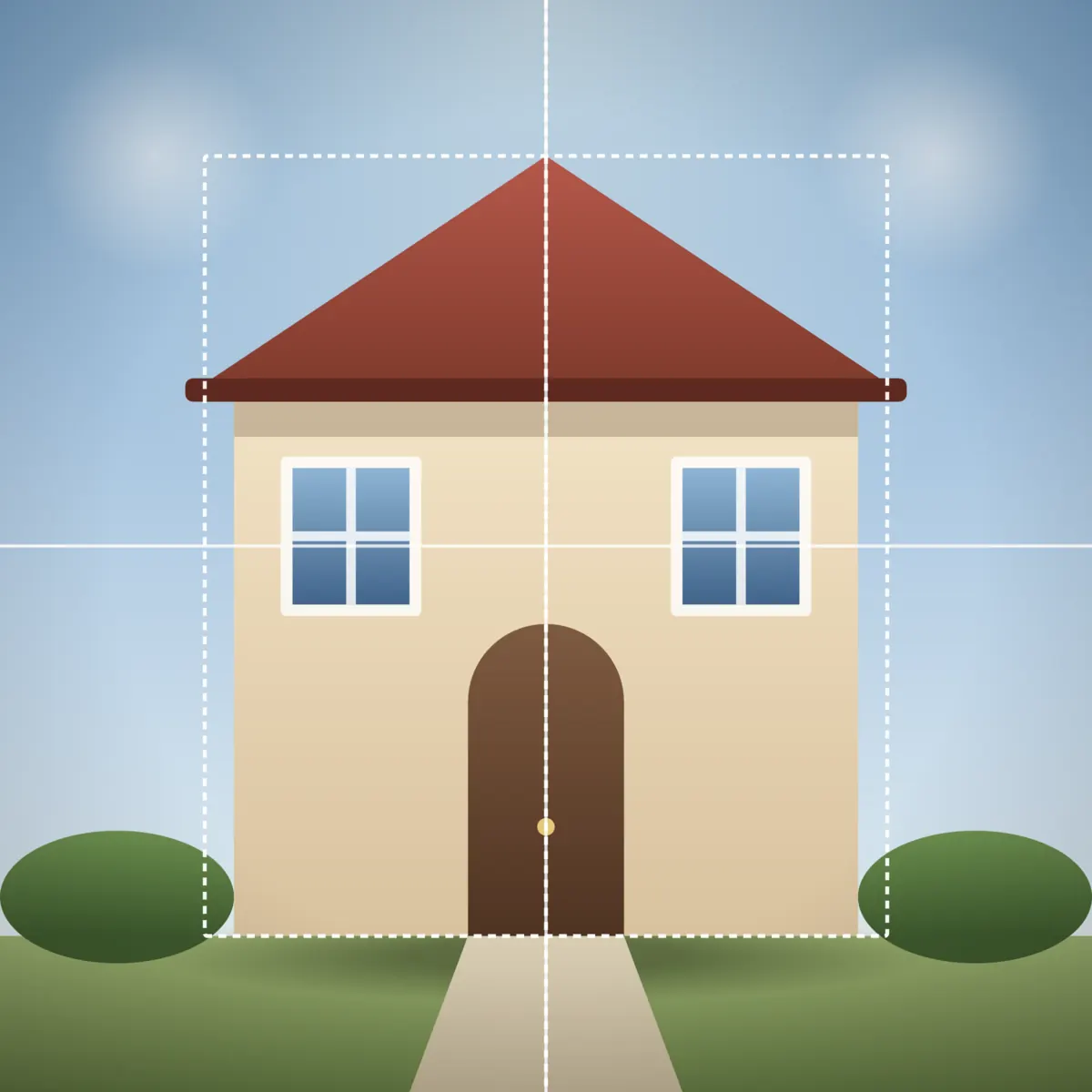
Here the whole scene is the mirror. A facade with matching windows either side, a bridge seen down its length, a church interior from the aisle.
Finding the axis
Walk until the two halves line up. Watch pairs of matching features: two windows, two lamp posts, two pillars. When they sit at the same distance from the edges of the frame, you are on the axis. A step or two sideways makes a surprising difference.
Keeping it straight
- Hold the phone upright. Tilting it up at a building makes the verticals lean inward, and the symmetry looks off. Step back and shoot level if you can.
- Keep the phone level side to side. A slight roll breaks a mirrored frame more than any other kind.
- Watch the distractions. A single parked car on one side breaks the mirror. Wait, or move.
Vertical Symmetry is the guide for facades, doorways and anything mirrored.
Reflection: a mirror across the middle
Still water, wet pavement or a glass building gives you a horizontal mirror. The scene above appears again below. The classic frame puts the waterline across the middle, so the two halves match.
- Go early or late. Water is often stillest in the morning and evening, when the wind drops.
- Get low. A lower camera shows more of the reflection and makes the water look like a sheet of glass.
- Level the waterline. A tilted waterline ruins a reflection immediately.
- Let the reflection run wide. A reflection that crosses the whole frame reads as a mirror. A small patch of water reads as a puddle.
- Consider breaking it. A single ripple or a stone at the waterline can give the eye an entry point.
The Reflection guide draws the level waterline across the middle.
Common mistakes with symmetry
- Almost symmetrical. A frame a little off centre looks like an error. Either commit to the centre or move clearly to a third.
- Leaning verticals. Pointing the phone up at a building makes its sides converge. Step back and keep the phone upright.
- A crooked horizon. Symmetry magnifies any tilt.
- Forcing it. Centring a subject in a lopsided scene does not make the scene symmetrical.
Letting the camera find the axis
It is hard to judge a few centimetres of offset on a small screen. Camera Grid measures the mirror axis in the scene on the phone and offers Dead Centre or Vertical Symmetry when the scene is strongly mirrored, and Reflection too with Camera Grid Pro. It tells you which way to pan until the axis sits in the middle, and it goes quiet when the framing locks.
Checklist
- Centre only when the scene or subject is balanced left to right.
- Stand on the axis: match pairs of features to the frame’s edges.
- Keep the phone upright and level.
- Check that the margins on each side are equal.
- For reflections, put a level waterline across the middle and let it run the full width.
- If it is nearly centred, commit to the middle or move clearly off it.