Camera Grid
- Objects & groups
- FREE
Triangle: arrange three things, apex up
Three things that should feel settled. Spread them into a triangle, apex up.
What it is
Three objects arranged as a triangle standing on its base feel settled and stable, the way a pyramid does. The shape gives the eye a path from one object to the next and back again, and the wide base anchors the group to the surface. Placing one item further back and two in front creates depth as well as balance. It is a classic arrangement for food, flowers and still life, because it holds a small group together without lining it up.
When to use it
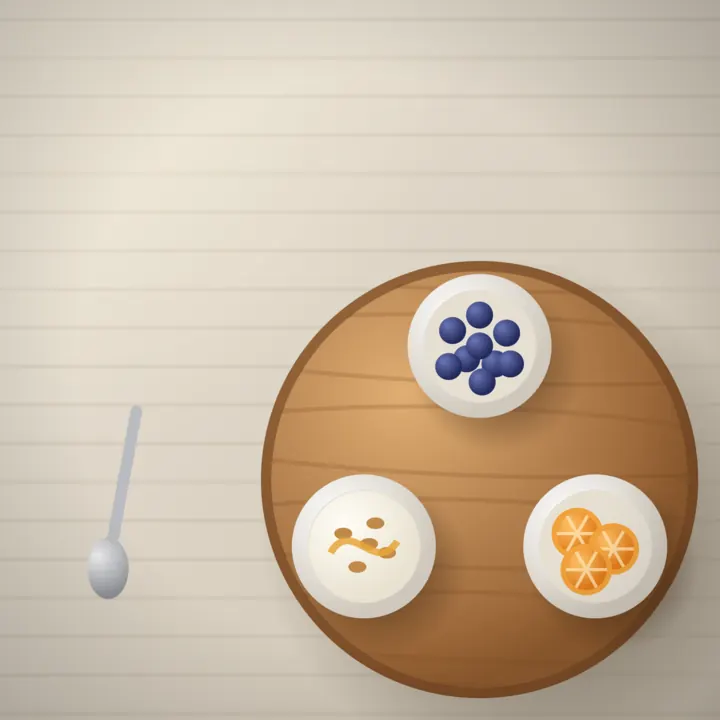
- Three dishes or bowls on a dining table
- A teapot with two cups on a tray
- Three candles, plants or jars on a surface seen from above
How to shoot it
- Put three things on a table and look down at about 45 degrees. Triangle is offered from above.
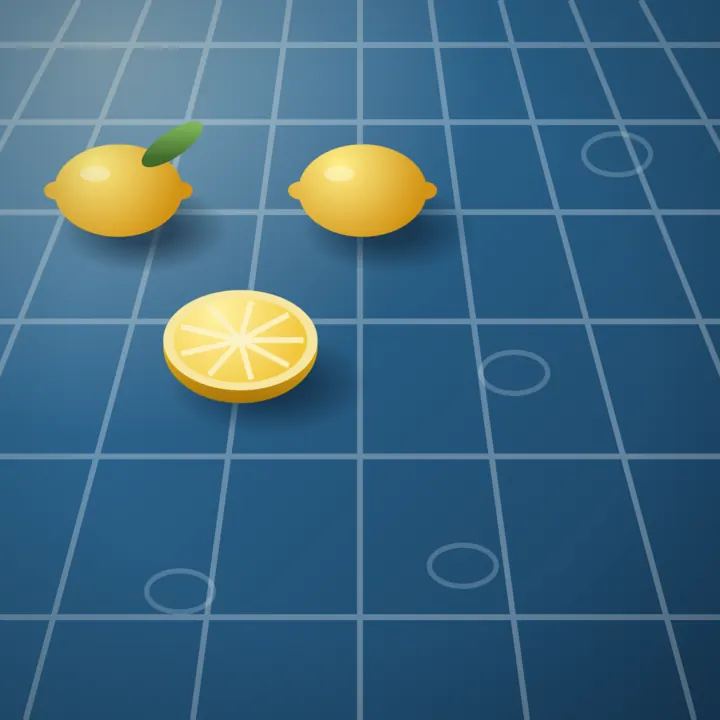
- Camera Grid draws three target circles as a triangle, apex up and foreshortened to match your angle, and keeps it fixed.
- If the objects do not make a triangle yet, the coach says “Spread them into a triangle”. Move them until the filled markers fall into the circles.
- Tilt when the coach asks, so the phone sits near 45 degrees. A 2× to 4× zoom keeps the group tight.
- The ring turns green with a tap when the shape, the placement and the angle agree.
Common mistakes
- Lining the three objects up in a row, which reads as a row.
- Making the triangle so shallow that it looks like a line from the camera's angle.
- Spacing the objects so far apart that they stop reading as a group.
Questions
Why do photographers arrange things in threes?
An odd number is harder for the eye to pair off, so the group feels natural and complete. Three is the smallest group that can form a shape, and a triangle gives both balance and movement. Camera Grid also has triangles apex down and seen straight down, both in Camera Grid Pro.
What is triangle composition in photography?
It means arranging the main elements so they form a triangle, either with three objects or with lines in the scene. A triangle on its base feels stable; one standing on its point feels more tense. The eye moves around the three corners, which holds attention inside the frame.
Frame it. Lock it.
Triangle is one of the 16 free guides in Camera Grid. Point your iPhone at the scene and the app draws it for you.