Camera Grid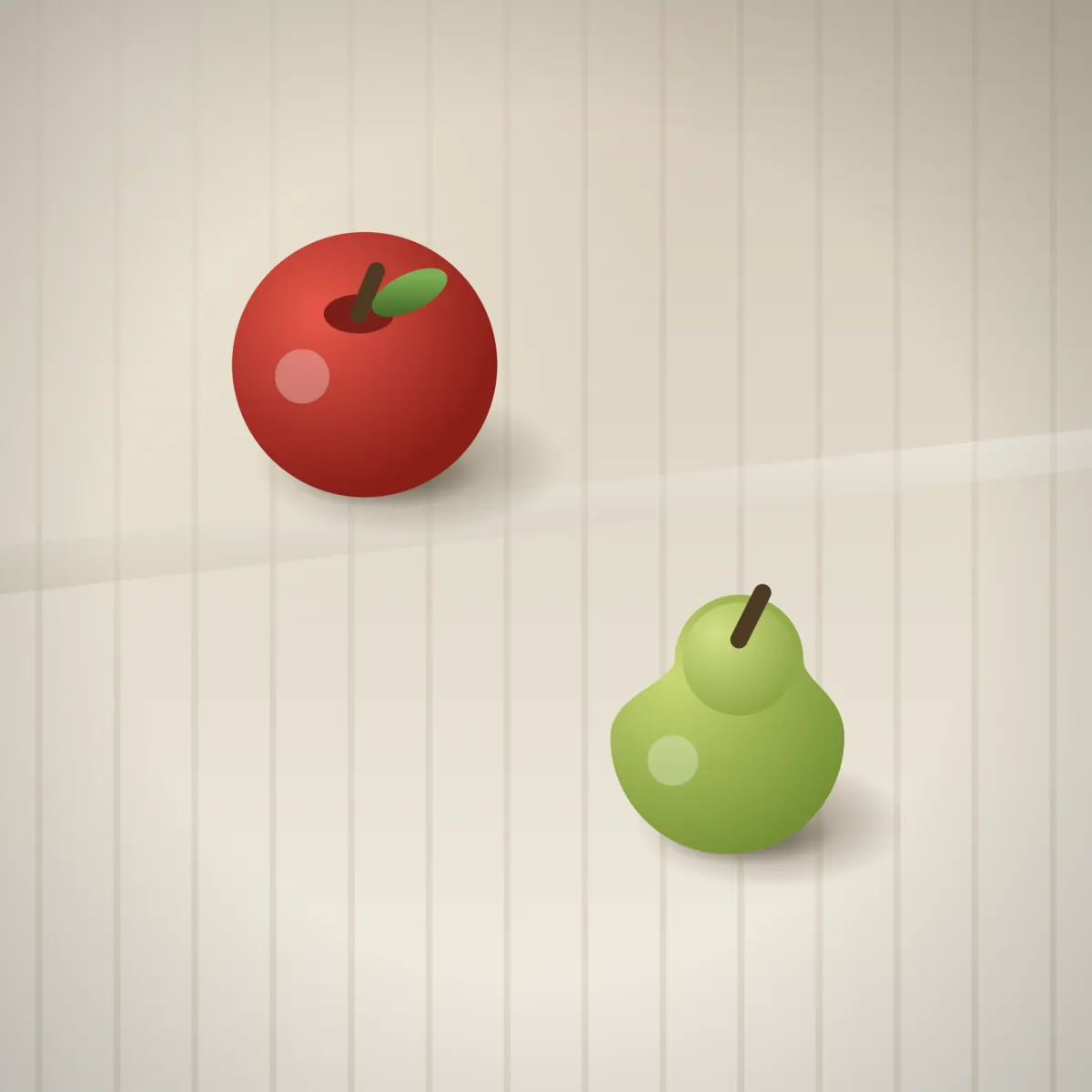
- Objects & groups
- FREE
Opposing Vertices: two objects on a diagonal
Two objects on opposite third crossings, so the frame reads as a diagonal.
What it is
With two objects, the risk is a picture split in half, each object demanding equal attention. Opposing Vertices places them on opposite third crossings, one upper left and one lower right, or the reverse. The eye moves between them along a diagonal, which feels more dynamic than a side-by-side pair, and the empty corners balance the filled ones. Seen from above at about 45 degrees, it suits two cups, a plate and a glass, or any pair with a relationship worth showing.
When to use it
- Two coffee cups on a café table
- A plate and a glass of wine
- A pair of shoes or two pieces of fruit on a surface
How to shoot it
- Set the two objects on a table and look down at about 45 degrees. This guide is offered from above only.
- Camera Grid draws two target circles on opposite crossings, chosen so the objects need the smallest move, and holds them still.
- Filled markers show where each object is. Move the objects or the phone until both sit in their circles; a 2× to 4× zoom often helps.
- Keep the angle where the coach wants it. The ring locks green with a tap when both objects and the angle line up.
Common mistakes
- Placing the two objects level with each other, which splits the frame into two halves.
- Pairing two objects that have nothing to do with each other.
- Shooting from eye level, where one object hides behind the other.
Questions
How do you compose a photo with two subjects?
Avoid lining them up side by side at the same height. Put them on a diagonal, on opposite third crossings, so the eye travels from one to the other. Vary their distance from the camera if you can. Camera Grid draws the two targets and scores both placements.
Why is Opposing Vertices only used from above?
The guide scores a camera looking down at about 45 degrees, like a view across a table. At eye level two objects tend to overlap and the diagonal flattens out, so Camera Grid only suggests it when the phone is angled down at a surface.


Frame it. Lock it.
Opposing Vertices is one of the 16 free guides in Camera Grid. Point your iPhone at the scene and the app draws it for you.